
8am and damn hot, 8am and bloody humid, 8am in the Brazilian
rainforest. Tramping through the jungle and trying to keep up the
fast pace of the Indian guides, the perspiration stung as it ran
into my eyes. My camera pack seemed to weigh a ton and was biting
into my 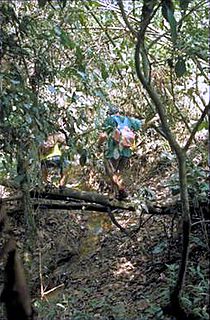 shoulders. Then we burst upon it. It was only a
small ravine, a twenty-foot drop to a rocky bottom, where, in the
wet season the tiny stream would swell into a fast flowing angry
river. The streamlet travelled between large sharp rocks and
seemed to be willing me to fall.
shoulders. Then we burst upon it. It was only a
small ravine, a twenty-foot drop to a rocky bottom, where, in the
wet season the tiny stream would swell into a fast flowing angry
river. The streamlet travelled between large sharp rocks and
seemed to be willing me to fall.
The bridge across this dangerous gap was a dripping wet tree trunk about 16 inches in diameter and 35 foot long. I had camera gear as well as my overweight body to haul across to the other side, preferably without anything too disastrous happening either to my equipment or myself! I paused and thought, “It could all end in tears before our adventure has really begun.” Adam and I had finally reached the Amazon rain forest and were following the Yawanawa guides along what, to me, seemed a non-existent trail. We brushed aside all sorts of hanging vegetation that criss-crossed in front of us.
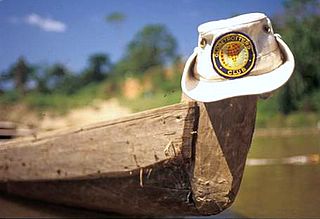
I jammed my 'Tilley' hat hard on my head, trying to avoid the sharp Boca (that looks like bamboo but unlike the giant bamboo, has small, sharp, vicious thorns) from piercing any part of my face. The heat and humidity was making the sweat pour out of me like tiny rivers which ran all over my body, soaking me from head to toe. This trip was hard, tough and very different from anything I had imagined whilst planning my journey back in the calm of Kensington. “So isn't this what you so wanted?” I said to myself. “If you don't like it, it's too bloody late. Stop daydreaming: and cross that ravine.” When, finally and thankfully, I reached the other side, I stopped to take a breather – and said to myself, “Are you sure you haven't bitten off more than you can chew?”
Adam Baines and I first met in the Globetrotters Club. He had
just cycled around Vietnam and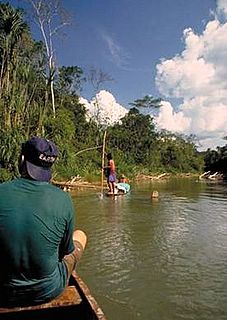 I was not long back from doing the same in New
Zealand. He had heard that I was planning a journey to somewhere
in the back of beyond of the Amazon Basin and as we both like
living on the edge, so we teamed up, thinking “what the
hell, let's do it.” Adam was thirty something, fit, and
spoke fluent Spanish; I was fifty something, not so fit and spoke
fluent Portuguese.
I was not long back from doing the same in New
Zealand. He had heard that I was planning a journey to somewhere
in the back of beyond of the Amazon Basin and as we both like
living on the edge, so we teamed up, thinking “what the
hell, let's do it.” Adam was thirty something, fit, and
spoke fluent Spanish; I was fifty something, not so fit and spoke
fluent Portuguese.
This was not only the story of a tribe's phoenix like renaissance, but was also the tale of two independent travellers' great adventure way down the Rio Gregoria near the borders of Brazil and Peru. 'Yawanawa' – 21st Century Warriors' was a taste of where we've been, what we have done and what's been done to us, what we enjoyed what we didn't, did it all turned out cool or did it all end up pear shaped? Like the films used to say – it all started back in the summer, when – – –
 So Adam and I went off
into the depths of the green rainforest and our story of
frustrations and successes have been written down and seen in
various articles, slide shows, for the Globetrotters Club and
others. To this day we are still good friends having survived the
'Urban Jungle' as well as the 'Amazon jungle'.
So Adam and I went off
into the depths of the green rainforest and our story of
frustrations and successes have been written down and seen in
various articles, slide shows, for the Globetrotters Club and
others. To this day we are still good friends having survived the
'Urban Jungle' as well as the 'Amazon jungle'.
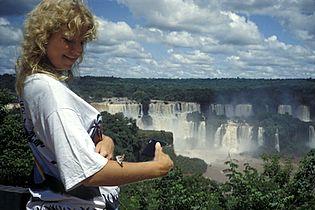
A lovely lady had introduced me to the GT Club around seventeen years ago and awakened my interest not only in her lovely self but also to adventure travel around the world. We saw where the Amazon met the sea in Marajo in the north and travelled south to those magnificent falls at Foz do Iquacu as well venturing into Africa. A wonderful adventurous person, the type one could only encounter at our club.
 I have met and I'm sure I will still meet
some wonderful and life long friends in my time at the
Globetrotters Club. So thanks to them, some good nights in the
pub with Dick and with the members – Good conversation after the
'Slide Talks' have finished – My independent travelling
days are not yet over, with the help of all my vitamins, I will
continue to roll around this exciting world, either with or
without a travelling companion from our great Globetrotters Club.
I have met and I'm sure I will still meet
some wonderful and life long friends in my time at the
Globetrotters Club. So thanks to them, some good nights in the
pub with Dick and with the members – Good conversation after the
'Slide Talks' have finished – My independent travelling
days are not yet over, with the help of all my vitamins, I will
continue to roll around this exciting world, either with or
without a travelling companion from our great Globetrotters Club.
About the author Tony Annis: Have camera will travel. Over the top but not yet over the hill. Past sixty five and still alive, my get up and go has not entirely got up and gone – like good whisky, I'm still going strong. Travelling through these global villages of ours is great adventure but to me it is the people that make this wonderful world, as well as the exotic places that I love to visit. See you over the next horizon, Tony.
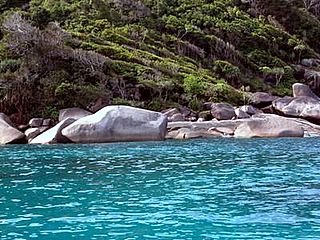 The Similan Islands can be found about one hundred kilometres northwest of Phuket, Thailand. They comprise nine granite islands covered in tropical jungle. The word Similan is said to be given by Malay fisherman who named it “The Nine Islands” (Sembilan is “nine” in Malay) and now the islands are identified by a Thai name and a number, for example, Ko Huyong (Island #1), located at the southern end of the chain or Ko Miang (Island #4) located in the middle. The Similan Islands are national parks and there is limited accommodation on them.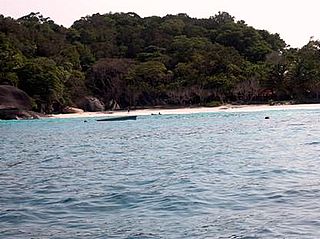
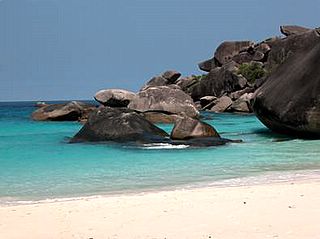 There were 15 of us and three dive guides. Usually, you are put into groups according to experience, but this did not happen here, so we had mixed ability groups, and then I discovered that of the 15 people, 5 people were novices and had only just completed their PADI open water course, which seemed incredibly mean for them – the Similans is not easy diving, strong currents and deep. The problem with being in mixed groups is that in these conditions, you usually have to surface when the first person is low on air and needs to come up to the surface, and in this case, this was sometimes after 20 minutes. Not ideal. Having said this, the beginner divers coped extremely well with the difficult conditions, far better than I would have at their level. It wasn’t their fault, they’d just been ill advised to go to the Similan Islands. There was one couple who didn’t mix much with the rest of the group, who between them had a couple of hundred dives. It seemed to be their mission to destroy as much sea life as possible on each and every dive. Between them, they seemed to flatten and break any hard corals that came in their way. Night dives were the worst times to witness this mass destruction. The dive guides said and did nothing about this blatant lack of consideration, and bad dive manners. None of us wanted to dive with them, and after a while they were allowed to go off and do their own thing as they were also avid photographers and were usually far behind the rest of the group anyway.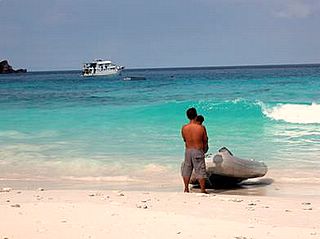
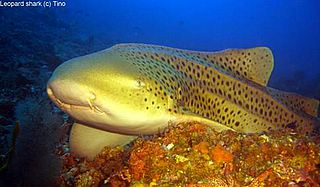 Strong currents in places, a lot of surge in others, and in one case, 3m visibility. I’d done a couple of dives around the Phi Phi islands on a cattle boat (i.e. 45 divers), which whilst the visibility was not that great, the diving was far superior to all but two of the dives I did on the Similan Islands. Something was wrong, seriously wrong, it should not have been like this.
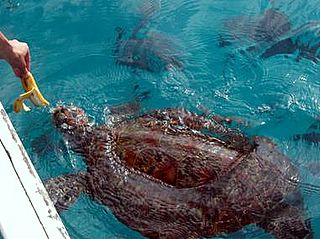 really happened. It seems to be like this: the owner of the boat is greedy, he pays the crew including the dive masters very little, but is good at marketing. The three dive masters had never worked together before and were relatively new to the Similans and one is well known for not looking after their charges. Theï¿Â½dive sites we visited were largely not the best for diving, but more convenient for the sailing schedule. I am not pleased that given the money I paid that we didn’t even tick off some of the best sites, we just didn’t. A classic flog it and ignore the complaints scenario.
 Mac has not been very well, but is still e-mailing strong. In this edition of the Globetrotter e-newsletter, Mac sympathises with the Beetle for being given a hard time in Sydney and talks about some of his time in Japan whilst based there shortly after WW2.