
Although, now perhaps ‘old news’ to those of us living and working in Mikindani we couldn’t let this event pass unreported. Last November The Old Boma’s reputation had had yet another shot in the arm! The District Commissioner invited us to prepare lunch for the Tanzanian Prime Minister and 30 of his party; approaching election time he was going to be making an official visit to Mtwara Region for 2 days. However it was not to be held at the Boma but at a Primary School in the remote village of Hinju some 50 km inland from here. The village is so remote that there are no facilities at all – no power, limited water and we would have to take absolutely everything with us. Initially they thought we would donate the entire cost! However, when I explained that we are a charity they agreed to give us a ‘donation’ to the cause which did just about cover the cost of the food.
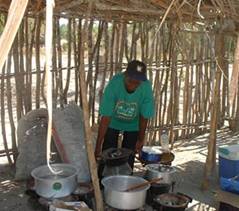 Friday – the shopping trip
to Mtwara took 5 hours whilst Esther searched all over town for
enough chickens to feed this crowd whilst the goat in question was
tethered outside the Boma bleating for a few hours. Saturday –
kitchen a hive of activity chopping, cutting, marinating and
counting bottles of water, soft drinks, plates, glasses, knives,
forks etc. Last minute panic appeared non-existent – my own
memories of the night before a major event of this importance were
very different!
Friday – the shopping trip
to Mtwara took 5 hours whilst Esther searched all over town for
enough chickens to feed this crowd whilst the goat in question was
tethered outside the Boma bleating for a few hours. Saturday –
kitchen a hive of activity chopping, cutting, marinating and
counting bottles of water, soft drinks, plates, glasses, knives,
forks etc. Last minute panic appeared non-existent – my own
memories of the night before a major event of this importance were
very different!
It was a very early start on the Sunday morning – but the excitement was tangible! On the unmade country roads there was no sign of a police or security presence -the only suggestion that the PM might be in danger was the Prime Minister’s Waiter hovering around ‘tasting’ the food whilst we were preparing it – he must have approved because he kept coming back for more!
We had originally been told that lunch would be at 2.00pm – then they changed that to 12.30 – as it happened the official party turned up at 2.15! But there was a lot of ‘on site’ preparation so several hours were required. We were given the headmaster’s office for preparation (including the barbecue – his office will never smell quite the same!) and the classroom next door was turned into a dinning room. The rest of the food preparation and the cooking was done in the open air on the other side of the school!
In the ‘dining room’ tables were arranged around the edge of the room in a ‘U’ formation and white sheets were used as table clothes. With the new Boma china, some hastily created green & black batik it all looked very elegant or at least as elegant as it could be in a classroom with concrete walls, a corrugated iron roof and a huge old blackboard on the wall!
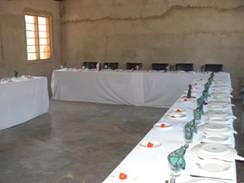 The official party arrived in a flurry of dust as about 40 cars
swept into the school ground. In the background was the celebratory
sound of drums and chanting, and there were dancers that we could
hear but not see from our corner of the school ground. Because they
were so late we abandoned all attempts at ‘silver service’ and put
a couple of desks in the centre of the room as a buffet and allowed
them to help themselves. We were advised to do this so that we
could not be held responsible for delaying them and influencing how
long they took to eat!
The official party arrived in a flurry of dust as about 40 cars
swept into the school ground. In the background was the celebratory
sound of drums and chanting, and there were dancers that we could
hear but not see from our corner of the school ground. Because they
were so late we abandoned all attempts at ‘silver service’ and put
a couple of desks in the centre of the room as a buffet and allowed
them to help themselves. We were advised to do this so that we
could not be held responsible for delaying them and influencing how
long they took to eat!
The menu
Roast Goat (marinated with ginger and then cooked on the BBQ)
Marinated Chicken (with garlic and lemon, also cooked on the
BBQ)
Beef Curry
Vegetable Curry
Pilau rice / Plain rice / Ugali / Salad
Fresh fruit – (as the PM does not eat any fruit that is already cut
– it was just bananas!)
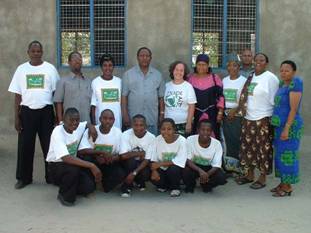 After they had eaten the
District Commissioner invited the whole Boma team into the room,
introduced us and gave a short speech of thanks for providing such
a wonderful lunch. He acknowledged that the Boma is run by Trade
Aid and proceeded to thank Trade Aid for providing this opportunity
for employment and the development of tourism in the Mtwara Region.
The Prime Minister's photographer recorded the event and held a
photo shoot taking a number of pictures on the Trade Aid digital
camera.
After they had eaten the
District Commissioner invited the whole Boma team into the room,
introduced us and gave a short speech of thanks for providing such
a wonderful lunch. He acknowledged that the Boma is run by Trade
Aid and proceeded to thank Trade Aid for providing this opportunity
for employment and the development of tourism in the Mtwara Region.
The Prime Minister's photographer recorded the event and held a
photo shoot taking a number of pictures on the Trade Aid digital
camera.
Once all the clearing up and packing up was complete we set off back to Mikindani. ‘Tired but happy’ is a phrase that comes to mind! PS - all the Boma China that went to Hinju came back intact! Well done! to the team once again.
The summer is soon here and that reminds us of our romantic honeymoon we had last summer. We want to share our memories with you.
We got married last summer outside Brighton, UK, after 10 years together and we had a fantastic wedding with all our friends, 110 persons. On our honeymoon we wanted to start with relaxing on the countryside and then some city life. We choose Sweden and Stockholm, not far from London, and with fast direct access. And we found a tour operator, Peace and Quiet Travel, offering what we were looking for. Three nights in the beautiful Mälar Valley and two nights in Stockholm! The week after our wedding we were on our way.
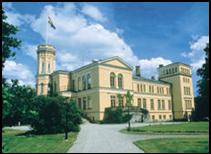 After picking up
our rental car at the airport and after some looking on the map we
found Surahammar Manor. A fantastic place in the Mälar Valley with
romantic surroundings! And such a family atmosphere! The owners
themselves welcomed us and we got a high standard room facing the
parkland. All rooms are individually decorated with elegant
antique furniture. And we really enjoyed the welcome dinner with
Swedish schnapps. In the evening we went early to bed, talked about
our wedding and revelled in that pleasant tired feeling in your
body and serenity in your heart that only a great day can
bring!
After picking up
our rental car at the airport and after some looking on the map we
found Surahammar Manor. A fantastic place in the Mälar Valley with
romantic surroundings! And such a family atmosphere! The owners
themselves welcomed us and we got a high standard room facing the
parkland. All rooms are individually decorated with elegant
antique furniture. And we really enjoyed the welcome dinner with
Swedish schnapps. In the evening we went early to bed, talked about
our wedding and revelled in that pleasant tired feeling in your
body and serenity in your heart that only a great day can
bring!
And what did we do in the Mälar Valley? After breakfast we
went canoeing and brought our own picnic lunch with us. Total
relaxation and what a scenery, unspoilt and beautiful! In the
afternoon we decided to go fishing, a new experience for both of
us. We hired the equipment and thought that we had to go far
away,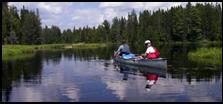 but not. We
were fishing from the Manor’s park! After some hours we had got
four salmon trout and thought it was enough. In the evening we
prepared them together with the cook. Never has a dinner
tasted so good!
but not. We
were fishing from the Manor’s park! After some hours we had got
four salmon trout and thought it was enough. In the evening we
prepared them together with the cook. Never has a dinner
tasted so good!
Next day we decided to be a little cultural so we went to Tidö Castle, a well-known Mälar castle. Tidö is from the 1600s and famous in part for its 43 magnificent carved doors with wood inlay and also for a comprehensive toy museum. We enjoyed a romantic walk, before dinner, in the Manor’s flower-filled parkland, along small paths, over small white bridges, and watched carp swimming in the pond. Our last day we tried horse riding, new for me but not for Mary. The stables were just five minutes away and an instructor took care of us and gave us a riding lesson and then we went out in the countryside in a slow pace. Both relaxing and exiting! The service at Surahammar was very high, they suggested excursions and helped us in every possible way.
Stockholm city life: We checked in to our double room at hotel Terminus, located in the very centre of Stockholm. The hotel opened in 1909 and is well-known for its traditional atmosphere and personal service. Near to all that Stockholm offers of restaurants, theatres, shopping, historic buildings and other attractions. In the afternoon we enjoyed a walking tour in the Old Town and visited the Royal Castle. In the night we went to Spy Bar and mingled with Stockholm’s glitterati! The day after we took a guided boat tour under the bridges of Stockholm. And visited the Vasa Museum, a 17th century pride of the Swedish fleet, resurrected 333 years after sinking and the nearby Skansen, a zoo and the world’s first open-air museum. In the evening we just relaxed in one of Stockholm’s open-air cafés and enjoyed the city nightlife. Before leaving to the airport we just had a morning of leisure.
If you are interested in spending some time in the Mälar Valley, contact Eva at Peace and Quiet Travel, a Swedish tour operator, offering all sorts of packages to the Mälar Valley and combination Stockholm city and countryside. Eva can be contacted by e-mail on: info@peaceandquiet.co.uk or take a look at their website:
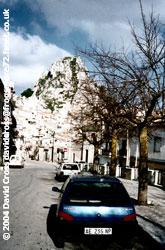
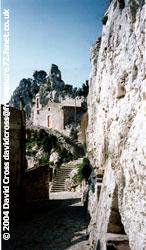 Sciacca is not really on the tourist trail
although it is extremely pleasant and some of the upper town is
really picturesque. There is no really cheap place to stay, though
the Paloma Bianca in Via Figuli was not really dear. The main
appeal of Sciacca for me is the fact that it is an ideal place for
an excellent bus trip to the hill village of Caltabellotta. Sicily
has so much to see [I missed the lovely west coast and most of the
interior, including a terrific Roman villa] that I suspect a lot of
people never make it to any of the smaller towns. Even though I
obviously saw them at the cost of some better known larger places,
Erice in particular, I feel that it is a pity not to sample some
and this is a beaut. From my knowledge of Sicilian hill villages I
would say that somehow they are less picturesque from a distance
but quite as good when inside them as those of the mainland. On the
ride to Caltabellotta it is going up high, rather than heading for
the village, which gives the pleasure and you need to be well up in
the village to see it at its best.
Sciacca is not really on the tourist trail
although it is extremely pleasant and some of the upper town is
really picturesque. There is no really cheap place to stay, though
the Paloma Bianca in Via Figuli was not really dear. The main
appeal of Sciacca for me is the fact that it is an ideal place for
an excellent bus trip to the hill village of Caltabellotta. Sicily
has so much to see [I missed the lovely west coast and most of the
interior, including a terrific Roman villa] that I suspect a lot of
people never make it to any of the smaller towns. Even though I
obviously saw them at the cost of some better known larger places,
Erice in particular, I feel that it is a pity not to sample some
and this is a beaut. From my knowledge of Sicilian hill villages I
would say that somehow they are less picturesque from a distance
but quite as good when inside them as those of the mainland. On the
ride to Caltabellotta it is going up high, rather than heading for
the village, which gives the pleasure and you need to be well up in
the village to see it at its best.
 This was only my fifth night out of eleven but already lack of time
was forcing me to adjust my plans. I had meant to go right around
the island anti-clockwise and hopefully to do a trip into the Villa
Imperiale inland. I now realised this was far too much to take on
and I abandoned any notion of reaching the west coast or Segesta, a
spectacular site to the west of the island’s capital, Palermo. This
meant cutting from the south coast to the north at Palermo itself.
I decided on one further southern escapade first – a trip to the
ancient Greek settlement of Selinunte It was necessary to change at
Castelvetrano from the bus bound for Trápani to the local minibus
to Selinunte and the modern village of Marinellla which is little
more than the accommodation for those going to see Selinunte. It
turned out that the wait in this rather ordinary place
[Castelvetrano] was going to be over an hour and a half, and then
when the bus was quarter of an hour late.
This was only my fifth night out of eleven but already lack of time
was forcing me to adjust my plans. I had meant to go right around
the island anti-clockwise and hopefully to do a trip into the Villa
Imperiale inland. I now realised this was far too much to take on
and I abandoned any notion of reaching the west coast or Segesta, a
spectacular site to the west of the island’s capital, Palermo. This
meant cutting from the south coast to the north at Palermo itself.
I decided on one further southern escapade first – a trip to the
ancient Greek settlement of Selinunte It was necessary to change at
Castelvetrano from the bus bound for Trápani to the local minibus
to Selinunte and the modern village of Marinellla which is little
more than the accommodation for those going to see Selinunte. It
turned out that the wait in this rather ordinary place
[Castelvetrano] was going to be over an hour and a half, and then
when the bus was quarter of an hour late.
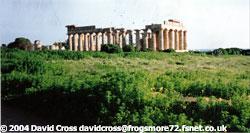 The eastern temples were mainly erected in the sixth century BC and
one of them, Temple E as it rather prosaically named, was
reconstructed in the 1950s. Apparently this was and is
controversial but I feel no qualms about it as long as some are
left as they are found. Whatever, it is a magnificent building and
I am sure a full size re-construction must be the best way of
illustrating to children what these temples were like. The
Acropolis area contains another five temples and most of the
ancient living area as well as the remains of the great walls.
These walls, however, are older than the rest of the remains,
having been built after the city had been destroyed once by
Carthage in order to defend the high ground from further
destructions.
The eastern temples were mainly erected in the sixth century BC and
one of them, Temple E as it rather prosaically named, was
reconstructed in the 1950s. Apparently this was and is
controversial but I feel no qualms about it as long as some are
left as they are found. Whatever, it is a magnificent building and
I am sure a full size re-construction must be the best way of
illustrating to children what these temples were like. The
Acropolis area contains another five temples and most of the
ancient living area as well as the remains of the great walls.
These walls, however, are older than the rest of the remains,
having been built after the city had been destroyed once by
Carthage in order to defend the high ground from further
destructions.
 The name of St Moritz
has an interesting story attached to it: the story told to me was
that Maurice (later turned into Moritz) was a Christian and came
from Egypt. He served in the Roman army under Julius Caesar
and led a Theban legion for the Roman empire and fought in the
Alps. He refused to obey the order of the Emperor Maximian
and sacrifice some Christians to the Roman gods because he was
himself a Christian. On hearing this, Maximian ordered
Maurice's regiment to be decimated – i.e. every tenth person
killed, and this went on until no-one was left. And so
commanding officer Maurice became a saint. Legend has it that
the rock used by Maurice to lay his head on so that he could be
beheaded is at St Moritz. Like England's St George,
St. Maurice is a patron of knights and soldiers. From the
12th century, due the similarity between his name and Maurus, he
was depicted as a Moor, so he became the black saint.
The name of St Moritz
has an interesting story attached to it: the story told to me was
that Maurice (later turned into Moritz) was a Christian and came
from Egypt. He served in the Roman army under Julius Caesar
and led a Theban legion for the Roman empire and fought in the
Alps. He refused to obey the order of the Emperor Maximian
and sacrifice some Christians to the Roman gods because he was
himself a Christian. On hearing this, Maximian ordered
Maurice's regiment to be decimated – i.e. every tenth person
killed, and this went on until no-one was left. And so
commanding officer Maurice became a saint. Legend has it that
the rock used by Maurice to lay his head on so that he could be
beheaded is at St Moritz. Like England's St George,
St. Maurice is a patron of knights and soldiers. From the
12th century, due the similarity between his name and Maurus, he
was depicted as a Moor, so he became the black saint.
 There are lots
of bridges across the River Reuss, it reminded me a little of
Ljubljana, especially with some of the dragon symbols, some of my
friends said Stockholm. One of the most famous is the Chapel
bridge built in the 14th century as a part of the city's
fortifications and named after St. Peter's Chapel, which is
located nearby. It has paintings on it including some info on the
city's patron saints, St. Leodegar and our friend St.
Maurice. There's also a very splendid 17th century
baroque Jesuit church. I really liked the water spikes that
act like a lock to regulate water levels like in a canal. and
you can see the remains of water mills.
There are lots
of bridges across the River Reuss, it reminded me a little of
Ljubljana, especially with some of the dragon symbols, some of my
friends said Stockholm. One of the most famous is the Chapel
bridge built in the 14th century as a part of the city's
fortifications and named after St. Peter's Chapel, which is
located nearby. It has paintings on it including some info on the
city's patron saints, St. Leodegar and our friend St.
Maurice. There's also a very splendid 17th century
baroque Jesuit church. I really liked the water spikes that
act like a lock to regulate water levels like in a canal. and
you can see the remains of water mills.
 On my final day in
Lucerne, I went to the tourist information centre at the train
station and asked where I could go in the mountains. They
suggested a trip to Rigi Kulm, so, using my rail pass, instead of
paying 79 Swiss Francs, it cost me 29 Swiss Francs. It was a
great adventure! I took a boat across Lake Lucerne, and then
a funicular or cog wheel train up the mountain to the top of Rigi
Kulm, about 1,800m, so not too high, and then the cog wheel train
to the half way point and a cable car down to Weggis back down by
the lake, and the boat again back to Lucerne. It was a
wonderful half day trip, where we could see above the clouds, the
mountain tops poking through, then there was the lake and the green
of the alpine pastures leading up to the mountains. There are
a couple of other mountain type trips you can do like this whilst
based in Lucerne.
On my final day in
Lucerne, I went to the tourist information centre at the train
station and asked where I could go in the mountains. They
suggested a trip to Rigi Kulm, so, using my rail pass, instead of
paying 79 Swiss Francs, it cost me 29 Swiss Francs. It was a
great adventure! I took a boat across Lake Lucerne, and then
a funicular or cog wheel train up the mountain to the top of Rigi
Kulm, about 1,800m, so not too high, and then the cog wheel train
to the half way point and a cable car down to Weggis back down by
the lake, and the boat again back to Lucerne. It was a
wonderful half day trip, where we could see above the clouds, the
mountain tops poking through, then there was the lake and the green
of the alpine pastures leading up to the mountains. There are
a couple of other mountain type trips you can do like this whilst
based in Lucerne.