
Category Archives: Main article
Meeting News from London byPadmassana
Our first speaker today was Terry Richardson, who showed us a new walking route in Turkey called “The St Paul’s Trail”, which starts down on the coast near Antalya and heads off up into the Taurus mountains for 500km.Terry showed us how he helped to set the walk up, which meant not only painting red and white way marks on posts etc, but also involved crossing rivers. The walk is very much geared to the people you meet along the way, there are few if any hotels, mostly walkers camp or stay with local families. The walk does take in some wonderful scenery including ancient sites, lakes and canyons, For more information you can visit www.stpaultrail.com
After the break it was Jonny Bealby’s turn to give us a wonderful talk, which although advertised as being Pakistan, turned out to be the story of how he got into the travel writing and tour business. When tragedy struck in India he was moved to ride a motorcycle from North Africa to Cape Town, which at the time took him through countries at war such as Angola, it took Jonny and his heavily laden machine just 100 days, he then rode back up again. But instead of just being a short term way to deal with his grief it mushroomed into a trip around Afghanistan, where he hired his own protection squad of mujahideen, though this didn’t stop some of the locals taking pot shots at him. Jonny now takes groups to such diverse places as Uzbekistan, Pakistan which though recently struck by the earthquake is now once again on the tourist trail. For more information you can visit www.wildfronriers.co.uk
By Padmassana
Forthcoming meetings: Saturday 7th January 4 Mini Talks and our New Year Party – Our January meeting gives four speakers to present 20 minute talks, an opportunity to introduce subjects within a tighter format. We hope that talks may include topics that couldn’t be sustained over a normal 40 minute talk or offer a launch for new speakers. By tradition we follow this meeting with a New Year Party post-meeting – everyone is invited to bring food and drink and participate!
London meetings are held at The Church of Scotland, Crown Court, behind the Fortune Theatre in Covent Garden at 2.30pm the first Saturday of each month. There is no London meeting in August, but we will be back in September. For more information, you can contact the Globetrotters Info line on +44 (0) 20 8674 6229, or visit the website: www.globetrotters.co.uk
Overseas Meetings
We used to have meetings in New York City and New Braunfels, Texas. Regrettably, after having done a superb job, neither organisers are able to give their time to Globetrotter meetings. If you are based in New York or New Braunfels and have the time to commit to pick up where our previous organisers left off, we’d love to hear from you – please see our FAQ or contact our the Branch Liaison Officer via our Website at Meeting FAQ. If you are based elsewhere and are interested in starting a branch of the Globetrotters, please feel free to contact us.
Meeting News from Ontario
For information on Ontario meetings, please contact Svatka Hermanek: shermanek@schulich.yorku.ca or Bruce Weber: tel. 416-203-0911 or Paul Webb: tel. 416-694-8259.
Meetings are held on the third Friday of January, March, May, September and November. Usually at the Woodsworth Co-op, Penthouse, 133, Wilton Street in downtown Toronto at 8.00 p.m.
Manas – Wildlife Heaven by MKS Pasha
Against the backdrop of the Eastern Himalayas lies a grass and jungle habitat of unparalleled beauty. Tigers, Asian elephants, golden langurs, one-horned rhinoceros and Bengal Florican share this wilderness with other rare and endangered species. And, as it flows down from the Eastern Himalayas to the plains below, the silvery waters of the Manas river nurture this paradise and the myriad creatures that reside within. Manas was chosen by UNESCO to be a World Heritage site.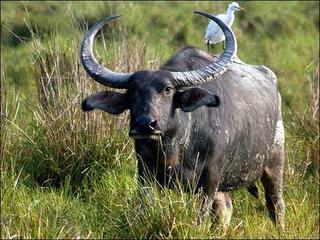
Manas is in Assam, and is a National Park included as part of the Project Tiger Reserve in 1973 at the time of launch of the Project Tiger in India. The Reserve area falls in six districts, Kokrajhar, Bongaigaon, Barpeta, Nalbari, Kamrup and Darrang. Barnadi Wildlife Sanctuary is located in the buffer of the Reserve. Manas is located at the confluence of Indian, Ethiopian and Indo-Chinese realms resulting in the magnificent biodiversity.
Home to the wild buffalo, elephant, tiger and rhino, Manas harbours the maximum number of endangered species from India as listed in the IUCN Red Book. Lying in the foothills of the outer Himalaya, the low-lying and flat Manas habitat is a linear belt that extends between the Sankosh river to the West and the Dhansiri river in the east. Manas landscape offers one of the most stunning sceneries among the wildlife areas in India. Additional excitement is to make time for a trip across the river to Bhutan for which you need permission from the authorities. Permits to visit can be obtained from the Field Director’s Office in Barpeta Road.
Key Species: Tiger, capped langur, wild buffalo, hoolock gibbon, golden langur, elephant, pygmy hog
The weather: climate is typically moist tropical. The temperatures in summer are at a tolerable 35�C with nights at 18.3�C. The winters are cool with a maximum temperature of 24�C and the minimum at a chilly 7.2�C. Rainfall between 3,332 mm. to 4,489 mm. is a regular feature. Heavy downpours that flood the park are not uncommon. The humidity is high, up to 76 per cent. November and February are deemed to be the best seasons.
Getting to Masnas: By Air: Guwahati airport is 176 km. away. By Rail: Barpeta Road (40 km.) is the closest railhead to Guwahati. From here, one can continue onto Manas by road. Barpeta Road also serves as the sanctuary headquarters. By Road: Manas is accessible from Guwahati (176 km.), Kaziranga (403 km.), Darjeeling (466 km.), Shillong (287 km.) and Siliguri (386 km.) . Vehicles can be taken up to Mothanguri. Jungle visits may be on elephant back, jeep or car. With special permission boat rides are possible.
MKS Pasha is a Wildlife Conservationist by profession. He has a Masters’ degree in wildlife and has carried out wildlife research for 6 years with the apex Institute of India: Wildlife Institute of India on Ecology of Indian Bison. He has travelled extensively through India and has worked for Wildlife NGOs coordinating species conservation projects. He currently heads up the wildlife division of Travel Inn India Pvt. Ltd, one of the leading companies in wildlife tours in India. He can be contacted by e-mail: khalidpasha@travelinnonline.com or visit his website: www.travelinnonline.com
Small Town, Big Fishing Problem! byRon Kirstein, edited by Lisa Cole
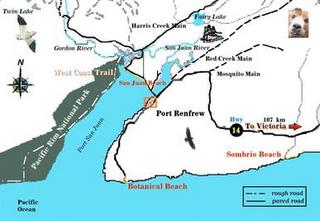 Port Renfrew is a small Canadian town with a major fishing problem. The problem is the sport fishing is great and only a few people know that. We arrive in Port Renfrew in late afternoon. Captain Quigley greets us at the entrance to Osprey Cabins. Quigley and his family provide these comfortable cabins in a beautiful rural setting – and there’s an outdoor hot tub to boot!
 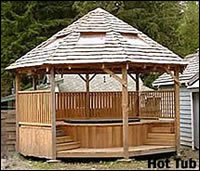 Their place is one of the most popular accommodations in Port Renfrew, and their rates are very reasonable.
Captain Quigley is one of the most skilled and knowledgeable guides we’ve ever met. We’ve been out with the affable “Capt Quigs” before, at his other fishing operation in Sooke, BC. (45 minutes west of Victoria), so we know we’re in good hands!
The alarm shatters our solid sleep at 5 a.m. We’re on the water by 6:00. The sun is just coming up behind us as we speed westward, heading towards the mouth of the San Juan Inlet. Quigley’s boat is fast and powerful. We hang on to our seats as we bounce over the big waves!
We stop just off Camper’s Bay, where the West Coast Trail from Port Renfrew meets the “Pacific Ocean” for the first time. The shoreline cliffs are spectacular and carved into numerous huge dark caves.
Captain Quigley points over the port side towards the open Pacific. “Next stop Hawaii, and that way, Japan!” The water is as calm as it ever gets out here, but the rolling swells are huge. The sun is shining brightly now, but cool dark fog is already rising from the water, cloaking the cliffs. It looks like the trees are suspended in the air far above us. Captain Quigley tells us we’re sure to catch some big ones today. Swiftsure Bank, where Juan de Fuca Strait drops off into the deep blue Pacific, is where halibut and salmon are most plentiful. It’s hard to believe we’re fishing on the edge of the open Pacific Ocean.
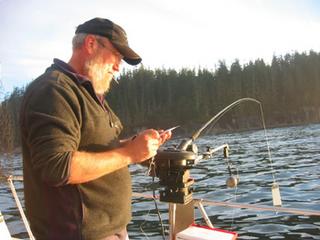 The first one I catch is a screamer! They call it that because it grabs the bait and takes off. The line literally ‘screams’ as the fish runs. Quigley knows what to do. He puts the boat in gear and chases the fish. My eyes almost pop when I look down at the reel and there are only about 3 wraps of line left! In seconds, the fish has run almost 300 yards of line. I reel as fast as I can until the line’s tight again and the fight’s back on. Non-stop excitement, boats all around us are getting strike after strike. On Quigley’s radio, we can hear the guides sharing information about their catches – “Double strike, 40 feet down!” They all share their success so everyone else can succeed too. Even when there’s a lull, and the fish aren’t biting, Captain Quigley is entertaining us. He teaches us his latest fish-luring chant and the accompanying dance: “Chinook, Chinook – Bite on my hook, my hook!” There’s never a dull moment on board. And when the fish are biting, Quigley is a very patient teacher: “Let him run! That’s it?? He’s got the whole boat to play with. Let him tire himself out??”
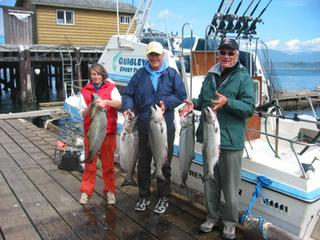 Later, Quigley tells us a story about the biggest fish ever landed on his boat. He had taken an elderly couple on an expedition, and it was turning out to be a disappointingly uneventful day – not one bite! Until they decided to turn back??. Then, all of a sudden, they got a nibble. It was a huge struggle, but with Quigley’s help, they reeled it in – a 52 pounder! Now that’s a really big salmon. It went on to win several categories in the fishing derby. We catch our limit long before the charter’s over, each fish is in the twenty-pound range. We had about 100lbs of fish on board, enough to feed us all winter! (We were fishing for spring salmon as the Coho and Sockeye fisheries were temporarily closed.) When I made dinner that night, back in Victoria, one fillet filled the grill on my barbeque! Five people dug in and there was 2/3 left over! We’re talking serious salmon here, folks! Small town, big fishing problem – right? Now you know.
Ron Kirstein is the owner of a Canadian Travel & Tourism Web site (since 1995). Ron has travelled the length and breadth of Vancouver Island BC Canada in search of adventures – see – http://tourismmall.victoria.bc.ca/travelmagazine
A short story to read next timeyou're on a budget flight! by Geoff Rees
“There must be a better way than this!” Jane muttered as she shuffled forward with all the other budget airline passengers. “After all it’s only a two hour flight, so why not make it just that little bit more comfortable, and not treat us like cattle?” Jane knew that it was a hackneyed expression, but said it anyway. It amused her as she thought of different names, such as Moove-over airlines, for the not so discerning traveller, and, Stampede Express, for the tourist who gets caught up in the rush. Jane must have laughed out loud as several enquiring and accusing faces glowered back at her. She could see them looking and shaking their heads in disbelief as she snorted with laughter! “Piggy Airlines, oink, oink, no free grub here!”
By now she was in convulsions, and only managed to stop when an over watchful security guard walked by and stared at her. “Threat to security too am I? Didn’t know that no frills meant no giggles too, oink, oink!” But, discretion being the better part of valour she shut up for fear of being kicked off the flight. The plane finally took off forty minutes late, with the pilot cheerily telling everybody, they would make up the time en-route. “Now sit back, relax, and enjoy the flight.” Jane would have liked to have done so but found herself wedged in between two rather large people, who, as it turned out were travelling together. Jane thought. “Why on earth don’t they sit next to each other?” So she asked the lady if they would like to change places. “Oh no! We were on first, and this is where we stay, thank you very much. Besides Ronny has to have the aisle seat, as he always gets air sick!” Jane shuddered at the thought, and to try and take her mind off what might happen she began to read. But as soon as the seat belt sign went off, ‘Mrs Ron’ needed to use the toilet! It seemed to take ages for all three to get unwedged from their seats and in the scramble Jane’s book got trampled on, tearing its cover, and scattering several pages under the row in front.
Finally ‘Mrs Ron’ was free. But, just as she started down the aisle, the seat belt light went back on. The flight attendant, who looked about twelve, but with the authority of a sergeant major, commanded ‘Mrs Ron’ to return to her seat, ‘for her own safety, as we are about to come into some turbulence.’ Hastily ‘Mrs Ron’ did as she was told, but on her way back to her seat, managed to reduce the remainder of Jane’s book into a mass of unreadable waste paper. Jane gave a mirthless grin, and sighed, “at last, real pulp fiction!” as she closed her eyes to try to shut out her predicament. No chance there though! Just as she began to doze off, Jane got an elbow in her ribs. She woke with a start to see Mrs Ron delving into a large bag. Jane watched with interest as she rummaged deep into its seemingly bottomless interior, finally producing a foil pack that was literally bursting open with food. Mrs Ron leaned over Jane. “Pilchard and sweet corn sandwich first Ron?”
Jane groaned as Ron reached over, clammily grabbing the strong smelling sandwich, and devouring it in three big bites! “Mmmm, that was good,” he mumbled, “what’s next?” Mrs Ron passed him a large flaky sausage roll, which he proceeded to eat in the same fashion, that was until he inhaled a crumb, and began to cough violently, and in all directions at once! Jane got her share, and so did the man across the aisle, but as he was sleeping didn’t notice his newly decorated arm. Jane just sat there, unable to move, because Mrs Ron was leaning over her fussing around with tissues. “There, there, dear, shouldn’t bolt your food, that’ll teach you not to be so greedy.” Just then the pilot’s voice came over the intercom. “Good afternoon ladies and gentlemen, we hope that you’re all enjoying the flight, you’ll be very pleased to know we’ve made up the forty minute delay, caused by congestion over Paris, and now we’re ahead of schedule, and should be landing in approximately thirty minutes. The weather in Barcelona is sunny and the temperature is 21�Celsius. If you look out of the windows you’ll see a lovely view of Southern France and the Alps, but please remain seated as there are some thunder storms ahead and we may experience slight turbulence, but there is nothing to worry about so please sit back, relax, and enjoy the flight” Jane groaned. “That’s about the last thing I can do, I just want to get off, things can’t get any worse than this, I hate it!”
But she spoke too soon. Ronny leaned over to his wife and announced he felt ill! He reached for the sick bag, just in time, and it was all Jane could do to stop herself from copying him. But she held her breath, and her resolve, until slowly the nausea passed. This didn’t stop ‘Mrs Ron’s’ panic as she proffered more tissues to her ailing husband. Luckily the flight attendant was on hand with a damp cloth, and a replacement bag. For the rest of the flight a very pale looking Ronny sat there, seemingly glued to his seat, with the sick bag and damp cloth clamped firmly to his face. When they finally touched down, Jane breathed a sigh of relief, but all to soon. because no sooner had the plane come to a standstill Mrs Ron was up and trying to clamber over her to help her husband. The damp cloth landed on Jane’s lap, and the sick bag dropped onto the floor under her feet. It was awful, her worst nightmare come true. But Jane’s inscrutability stayed constant. Only a few more minutes and they’d be out of her life forever, or so she thought!
Jane hadn’t realised that the airport was about 90km from Barcelona, at least another two hours journey. She’d planned to meet up with her friend Helen in time for lunch, and would have liked the chance for a shower beforehand, but by the time the bus was destined to arrive there it would be mid afternoon. “Nothing I can do about it anyway” Jane shrugged, as she bought her bus ticket. “I may as well sit out in the sun ’til its time to leave” She propped her shoulder bag against a tree, and, using it as a pillow, closed her eyes, breathed in the airport aroma of aviation fuel, tobacco, and coffee, and listened to the sounds of activity all around her. The constant gentle drone began to relax her and she started to regain her composure from the flight when she heard it! She sat up straight and looked. There they were, “The two Ronnies” pushing an overloaded baggage cart towards the bus. Jane watched as the driver, who had been sitting on a bench smoking and reading his paper, slowly get up to help them with their luggage. From his gaze Jane could already see his contempt for them building up as they neared him. He helped them to stow their cases and watched as they climbed up into the hot and stuffy bus. They collapsed into opposite seats and began fanning themselves with newspapers.
Presently the driver started the bus to get the air conditioning going, and slowly it began to fill up. But Jane, being a ‘super-cool’ independent traveller remained sitting in the sun until the last minute! The driver signalled to her that he was about to leave, and to get on board. Jane stamped her ticket and found a seat, well away from the two Ronnies. The driver began to check the tickets and as he made his way towards the back of the bus she heard a familiar voice. “Two tickets please.” She listened as the driver explained :”You must buy your tickets in the airport building but please hurry as we are going now!” The two Ronnies barged their way off the bus, making a lot of fuss and complaining loudly. Finally, just as the driver was about to remove their luggage, they returned looking rather hot and flustered. Jane began to feel sorry for them, as they seemed very dejected and forlorn. But, her sorrow was short lived as they plonked themselves down heavily in the only empty available seat, right behind her!
Eventually they arrived in Barcelona and Jane got to meet up with Helen. Over a drink at a pavement caf� she began to recount her journey, the crush to get on the flight, the cramped conditions, her neighbours eating habits, and finally the long bus ride to Barcelona. Helen stared at Jane in disbelief. “That must have been pretty uncomfortable Jane, but I’m surprised at you. We’ve been friends ever since junior school, and I always thought that you had an eye for a bargain!” Jane stared at her. “What do you mean? I got here for less then �70!” Helen laughed. “Plus your food, plus the bus fare, plus no choice of seat, plus the crush to get a decent place, plus the hassle of cramped claustrophobic conditions. I reckon you must have parted with at least �100 to get here. Need I say more?” Jane splutteringly tried to justify herself. “OK Helen, how did you get here then, by magic carpet?” Helen smiled sweetly back at her. “I booked my British Airways ticket on line, it cost me �90.00 all in, I got the seat that I wanted, and a snack on the flight. Plus they fly directly into Barcelona, and not some distant airport. By travelling my way I got here quicker and have more time to do everything I want to! Taking all your extra costs in to consideration I reckon I got the better deal don’t you?” Jane pondered for a moment, but had to reluctantly agree, and as she mockingly poked out her tongue she replied. “OK, smarty-pants, you’re right, I think I’ve learned my lesson. The cheapest deal isn’t always the best. Next time, before I press the ‘accept’ key on my computer, I’ll do some research and check out all of the options including Thomas Cook. Now, come on! Finish your drink, and lets get sight seeing. There’s so much I want to see. Besides, see those two people hovering at the entrance?”
TripAdvisor Survey
We mention the Trip Advisor survey in the side bar, but we thought you may be interested in seeing some of their key findings from a recent survey of over 3,000 travellers.
- Power vacations — We’ve heard of speed dating, now there’s speed relaxing. Eighty-three percent of travellers surveyed unwind in less than two days of vacation and 94 percent in less than four days.
- “Germaphobia”? — Americans seem to be twice as “germaphobic” as travellers from other parts of the world, and 22 percent of all travellers won’t leave home without one of the following: linens, pillow, disinfectant/cleaning supplies or shower shoes. Fifty-eight percent of those surveyed travel with their own shampoo.
- Natural disasters — According to 85 percent of survey respondents, hurricanes, tsunamis and earthquakes are now a factor when choosing travel destinations. Sixty-five percent said natural disasters were not a consideration prior to the devastating disasters of the past year.
- Star struck — Celebrities do indeed influence travel planning. Sixty- five percent of travellers surveyed have been to a destination known to have celebrity guests. The number jumps to 70 percent for Americans.
- Leave your inhibitions at home — Forty-three percent of women, but only 28 percent of men, said they dress more daringly on vacation than they ever would at home.
- Real men go to spas — Visiting a luxury spa was the third most likely vacation activity in the next year, following sightseeing and shopping. What was most surprising is that men are almost as likely as women to pursue pampering.
- Rolling the dice? — Adventure activities topped gambling in popularity
- thirty-six percent of travellers are likely to participate in adventure activities, including heli-skiing, white water rafting and bungee jumping on their next vacation versus 33 percent who are likely to gamble.
TripAdvisor.com is leading global travel information and advice destination, with more than 2.9 million unbiased reviews and opinions and covering 200,000+ hotels and attractions. With more than 18 million unique monthly visitors worldwide (source see
Scandinavia by Karen Bryan
I was looking forward to my first visit to Scandinavia. I had always wanted to visit Sweden but had been put off by the impression that it is really expensive and the desire to have better weather than at home when taking a break. Gothenburg is located on the south western coast of Sweden, at the mouth of the Gota River. As the plane descended toward Gothenburg City airport I had my first glimpse of Sweden. There was no sign of snow, but plenty of conifers and great views over the coastline. As I didn’t feel like rushing off the plane, I underwent a rather rapid acclimatisation as the end of the queue for passport control stretched outside in the icy blast. I donned the polo neck, hat and gloves before venturing out to find the bus into the city, There were a few people hanging around but no sign of a bus. I asked a young Swedish couple and they told the bus would not be there for over an hour. They asked if I wanted to share a taxi into the city with them. They were returning home from Carlisle, their place of study, for the holidays. Another young guy approached us, enquiring if he could share the taxi too, and he was a Swedish student from Edinburgh. The bus would have cost �4 but it was �6 for the shared taxi. I was glad to reach the city more quickly while it was still light.
My hotel, the Eggers, was just across from the railway station. It was originally built in 1859 as the railway hotel, yet although it was so central it was amazingly quiet. It was renovated in the 1990s, with the aim of maintaining its original charm. As soon as I stepped into the lobby I was in awe of the marble floor, the pair of Doric Greek Revival pillars and the chandeliers. My hotel room was understated elegance. It even had a small, tasteful chandelier. It was very comfortable, with appropriate antique furniture but also had a broadband internet connection!
I’d heard so much about Liseberg Park that I decided to visit on my first evening. Walking around the park made me feel more festive but in a typically understated Swedish way. It was really quite breath taking. 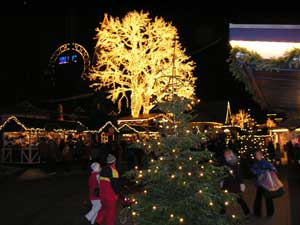 All the 3 million promised fairy lights were white and most of them draped around every branch of the trees, which made them look surreal. It was tasteful commercialism. The park was full of families, the kids excitedly queuing up for a ride in the reindeer drawn sleigh and toddlers practising their ski moves on the gentle nursery slope. There were braziers dotted around the park, in case you felt in need of quick heat or had some nuts to roast. The log cabin craft stalls sold all sorts of food, drink, gifts and homeware. It was very cold and windy, making me glad that I’d packed my thermal underwear.
I had heard the hotel had a haunted room, so next morning, I asked if I could see it. The manager very kindly showed me the room and told me the story. This was where the original owners of the hotel, the Eggers, had stayed. A couple of years ago when a chambermaid entered the room she saw an elderly lady sitting in one of the chairs in the lounge area. The chambermaid apologised to the lady saying that she had not realised that the room was occupied. The head housekeeper was consulted and confirmed that the room was vacant. On another occasion, a Swedish journalist staying in the room was advised by the barman to take a glass for the ghost when she retired to the room with a bottle one evening. She duly poured out a glassful for the ghost and when she awoke next morning the glass was empty!
I was keen to go down to the coast at Salthomen, a half hour tram ride from the city centre. I had a 48 hour Gothenburg Pass (costs around �24 for 48 hours) which covered all public transport, including ferries to the nearby islands and free entry to most museums and attractions. As Tuesday dawned (at around 9am) bright and sunny, I decided I should get going. Instead of being organised and first checking the times of the ferries to the nearby islands, I walked around and did some minor rock scrambling and took some photos. There were lots of boats tied up and wooden jetties to walk along. When I finally made it to the ferry terminal, I discovered that the ferry service had a 2 hour lunch break. There was a ferry just about to leave for the nearby island of Branno, but I either had to stay on the ferry and come straight back to Salthomen, or stay on the island for 2 hours and 20 minutes. I wasn’t willing to chance so long on the island as it was very cold, and I wasn’t sure what cafes or restaurants would have been open on a weekday in low season. I was cursing myself, as at any other time of the day I could have spent an hour on the island.
On arrival back at the city centre I decided to try a Swedish buffet lunch at the Scandic Europa Hotel. It was a wonderful spread, soup, salads, cold meats, breads, three hot main courses and a choice of desserts, for 98 Kroner (around �8). I have to say that I did not find Sweden to be any more expensive than the UK. I believe that alcohol is more expensive than in the UK, but as I never drink alcohol that didn’t affect me.
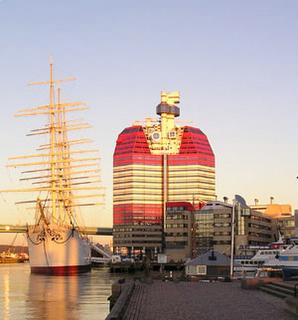 Then it was off the quayside to see the new Opera House and the sunset from the top of the Goteborgsutkiken (nicknamed the Lipstick). I also wanted to visit the Viking Barken, now used as a hotel-restaurant, and have a look at the cabins/rooms on board. There were 2 and 4 berth bunk bed cabins with shared bathroom facilities, or larger ensuite cabins. However, the lipstick viewpoint/cafe is only open during the summer. Anyway, I was keen to visit the City Museum, which closed at 5pm. The museum houses most of the wreck of a Viking longboat. There is a modern recreation of the boat hanging above, which gives you a more accurate idea of the dimensions. One of my favourite films as a child was a romantic adventure film about Vikings, starring Kirk Douglas. There were some Electrolux cylinder cleaners on display, and seeing things that you recall as household items as a child in a museum was rather disconcerting! There was a room featuring a Jubilee exhibition in Gothenburg during the Twenties. One of the reasons for the exhibition was to show Sweden’s industrial might. It also looked as though there was plenty of entertainment, and there was even a cr�che where you could leave the kids for the day.
The plan for that evening was to visit the Design Museum, as it was late closing there. It seemed to be sensible to do outdoor activities during daylight, and the museums in the evening. I returned to the hotel for a cup of tea (very thoughtfully provided in flasks in the foyer for guests). I already had a cold when I left Scotland and after being out in the cold I could not face going out again. I lay down on the bed at 5.15pm and then next thing I knew it was 7.30. The Design Museum was open until 9pm, but I had a bath, went back to bed and slept until 8am on Thursday morning. Although initially pretty annoyed with myself, I felt so much better the next morning, I consoled myself by rationalising that it was better to lose an evening than to chance feeling awful all the next day.
After breakfast I walked to the Fish Market. It’s called the “fish church”, as the building in which it’s housed resembles a church. It was much smaller than I anticipated. Then it was up to the Tradgards forenignen park to visit the palm house and the butterfly house. I had visions sitting reading with these tropical butterflies fluttering by. It was not to be, as it was closed for renovation. I wasn’t sure which museum to visit that afternoon, but was recommended to go the Universeum, 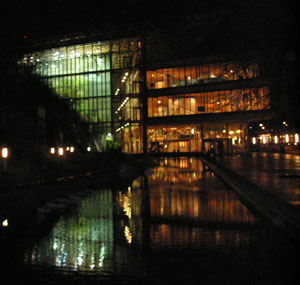 the science discovery centre. it was very imaginatively designed, with a recreated rainforest on several levels and a recreated Swedish landscape from mountain top to the seashore and below. There were also several floors of hands on activities. You could drive a Volvo lorry, design a model and get into nuclear physics (if so inclined). I couldn’t even manage to get 2 racing car models going with binary code! There are plenty of young enthusiastic multilingual guides at hand to explain things.
I did enjoy just walking around the city centre along the canal sides and through the narrow streets and the grand avenues. Gothenburg is a grand city in an architectural sense, very spacious. I’ve heard it called the Swedish Amsterdam. I think that this is a slight on Gothenburg, as in my opinion it is much more attractive and less commercialised than Amsterdam. As a lone female, I felt relatively safe walking around in the evening. There was very little litter around, no beggars or hustlers and a fairly obvious but discreet police presence. As soon as you approached a pedestrian crossing, the cars would stop. All the locals that I spoke to replied in good or excellent English and were very polite and helpful. I would call it an extremely civilised city, low key, sophisticated in an unpretentious manner, far from soulless and regimented yet orderly and relaxing.
Gothenburg can offer something for almost every taste and budget. Families are well catered for, most hotels have family rooms, there is the Liseberg amusement park and the Universeum (targeted at age 5 – 19). Kids under 17 can eat free at selected restaurants with the Gothenburg pass. The culture vultures have a plethora of museums and galleries to visit. The foodies can enjoy several Michelin starred restaurants and great choice of seafood. Nature lovers have the botanical gardens and the nearby coast and islands. Shopaholics have the largest covered shopping mall in Scandinavia. One of my sons tells me that there is a cool club scene there.
Gothenburg really does have it all. With the accessibility afforded by Ryanair flights (under 2 hours from Glasgow Prestwick) it is a great short break destination that does not, contrary to popular belief, break the bank. Many locals said to me that I should visit in the summer as it is lovely then. I enjoyed being there in the winter. It was dead quiet in the museums and the evening floodlighting was beautiful. There’s lots to do inside so your visit is not particularly affected by the weather. I was fortunate in my visit that it was dry all 4 days, although only sunny for one. Although the public transport is excellent, I did mainly walk around my ports of call in the city centre. It was too cold to stand waiting for buses and trams and I felt one sees more when walking around.
Karen Bryan is an independent travel consultant and writer, specialising in less well known destinations in Europe. Her websites are: www.europealacarte.co.uk
Greg McKenzie's Motorbike Travels OnRuta 40 in Argentina
 Trip duration: 63 days
Trip miles to date: 6,920
Miles since last update: 1,288
The week has passed quickly as I’ve enjoyed being back on the road after the extended lay up in Santiago. Having picked up the bike on the 18th (and being relieved of a very large amount of money from my friends at the BMW garage) I immediately left Santiago and rejoined the PanAmericana (route 5) north bound.

Just to get some miles under the wheels felt good enough, but the expense of the BMW dealership had returned a lot of comfort and peace of mind. The fact that they washed off the grime of the previous 5,000 miles also added to my sense of well-being. I still have reservations about the bike, I certainly don’t believe that nothing else will go wrong, but at least I’m confident that I can deal with it when it happens.
After travelling through the lush landscapes of the wine regions, the terrain quickly changed again as I approached the legendary Atacama Desert – no less beautiful, but certainly more dramatic. The greens turned to rusty browns and the temperature began to rise. First night stop was in La Serena, a pretty resort town about 300 miles from Santiago.
Before long I came across the much photographed Atacama monument. Essentially a hand cast in cement sticking skyward from the desert just south of Antofagasta. During the obligatory photo stop I incurred this weeks disaster (!). Whilst standing next to the bike for a self-timer photo, I watched the strong wind blow the tripod and camera over, straight down onto the lens of the camera – duly destroying the camera.
Extended travel by motorbike is tough on all equipment, things wear out very quickly but I felt this loss deeper than others as I had really enjoyed taking photos. I knew I would shortly be in Bolivia, where chances of getting a replacement would be slim until La Paz (the capital). So I changed plans and headed to Antofagasta for the night and managed to pick up a similar (albeit inferior) Olympus camera, which t least meant that the USB cable and software would already be installed on the small travelling laptop I’ve been using to create the web updates.

The Atacama is an extraordinary environment. It is officially the driest place on the planet with average annual rainfall of 0cms. As the sky is extremely clear and free from interference many countries and organisations choose to locate space observatories in the area – and I happened to pass close to the European Southern Observatory on route to Antofagasta.
The next day I left the main route 5 (The PanAmericana) but not until I had registered crossing the Tropic of Capricorn at 23d 70m S.
I then traversed the Atacama towards the Salar de Atacama – essentially a large dried up salt-bed. It’s a strange feeling leaving the relative security of the Route 5. I would now be on my own for the next 250 miles at the mercy of any mechanical mishaps. What I could control was NOT to crash (!) and to carefully manage my fuel consumption. I had filled the auxiliary 10 litre tank which would extend my range to comfortably make San Pedro de Atacama on the other side of the Salar.
As it happened, there was a steady trickle of trucks coming the other way, carrying salt from the state-controlled mine in the southern edge of the Salar. The photos cannot adequately show the terrain I was crossing and the sense of adventure and the feeling of remoteness and isolation.
This is EXACTLY what I envisaged when I planned this trip.

Before I reached San Pedro, I stopped off at the Flamingo sanctuary on the western side of the Salar and got my first chance to see them in the wild. The surroundings, the calm and tranquil environment and seeing these birds in their natural habitat made a big impact on me and I look forward to seeing more as I travel through the southern regions of Bolivia.
As if sent by a higher authority to reinstate my faith in Germans, whilst at the sanctuary I met with the Kirchhof family. Formally of Dresden, but now resident in Quito, Ecuador and taking a holiday around northern Chile. After a quick soda we exchanged details and they invited me to call them when / if I get to Quito.
San Pedro itself is a sleepy town catering primarily to tour groups and the backpacker industry. It consists of dusty streets lined with adobe buildings containing either restaurants or tour agencies offering excursions to the surrounding attractions. It was nice to stay a day and relax and get some latest information on the state of affairs in Bolivia and location of gas stops etc. A couple of agencies run 3 and 4 day tours into Bolivia, just 80 miles across at this point so I’m hoping they had reasonably up to date information.
Bolivia has endured a period of civil unrest in the past few weeks as confidence in the President and the level of exploitation from foreign owned energy companies has been called into question. Roads have been barricaded and there was a general strike that lasted 2 weeks.
A Venezuelan couple I met in Santiago had been instructed by the Bolivian border control to only visit La Paz – this about three weeks ago. Therefore it is entirely possible I will be turned away at the border and told to enter further north.
But in reality, I may never be in this position, with this opportunity again so I have to take the chance and enter tomorrow. Having talked to locals, and reviewing all the usual website updates (including the Foreign & Commonwealth website) I believe that the climate has cleared a little so I’m hopeful I will be able to enter.
If you want to know more about Greg’s travels, visit his website at: http://www.unbeatentrack.com/