
Air New Zealand and Qantas Airways confirmed have barred men from sitting next to unaccompanied children on flights. The policy came to light after a man seated next to a child was asked to change seats with a woman in another row and was told by a Qantas flight attendant that the airline’s policy stipulated that only women should sit next to unaccompanied children. The man asked to move, Mark Worsley, 37, was later told by the airline that Qantas wanted to err on the side of caution. “I felt that it was totally discriminatory,” Worsley told The New Zealand Herald. A Qantas spokesman confirmed the policy and said the airline believed customers wanted the policy.
Category Archives: enewsletter
SkyTeam Asia Pass
Visitors to Asia and the Pacific should look out for the new SkyTeam Asia Pass that gives access to 61 cities in 21 countries through three major gateways: Guam, Seoul and Tokyo, on flights with Air France, Continental Airlines, KLM, Korean Air or Northwest Airlines. You need to buy 3 coupons, or a maximum of 8, in conjunction with an intercontinental round-trip ticket to the region on any SkyTeam of the 9 SkyTeam member airlines, at www. skyteam. com. Someone arriving from Europe, America or Africa could choose to visit Beijing, Seoul, Tokyo, Osaka, Taipei, Bangkok and Saigon for $2,310 (8 coupons), saving at least $4,000 on regular air fares.
Dead Duck
A sparrow shot dead after flying into the middle of a Dutch world record attempt, knocking over 23,000 dominoes with a little flap of its wing is to be given pride of place at Rotterdam’s Natural History Museum. The bird, whose killing last month in the northern Dutch city of Leeuwarden enraged animal rights activists, will be placed on top of a box of dominoes at an exhibition. The sparrow was shot with an air rifle during a televised world record dominoes attempt. Thousands of messages of condolence were sent after its death to the website dodemus – set up to record the storm of protest from people across the Netherlands. The sparrow’s exterminator was fined €170 (£115) on Friday for shooting a protected species. The common house sparrow was added to the Dutch list of endangered species last year. Participants in the record attempt went on to knock down about 4 million dominoes to claim a new record, yet to be verified by Guinness World Records.
The sparrow will be on display at the museum this year with another dead bird, famous for different reasons – a male duck, obtained posthumously, said to be the victim of the first scientifically documented case of “homosexual mallard necrophilia”.
Fat Flyers
A belated entry to the e-newsletter; this was passed to me by Padmassana whilst the Beetle was working away in SE Asia.
Padmassana heard on the radio that a Thomsonfly a stewardess said she needed “eight fat people” to sit nearer the front because the captain of a half-full London-bound Thomsonfly flight was unhappy about the weight distribution and therefore the handling of his plane. Passenger Peter Harrison, who weighs 24-stone, said the request for people to move was made as the plane taxied to take off from Tenerife to Gatwick last Saturday. Mr Harrison added: The stewardess said there were too many passengers on the back of the plane and she needed eight fat people sat in rows 31 to 42 to sit near the front. Mr Harrison, a postman, was not in those rows but felt awkward. He said: “In the end eight people got up and shuffled forward before we took off.
Speak Chinese in Africa
Speak Chinese and travelling to Africa? You may get a chance to try it out. Zimbabwe’s government hopes to see Mandarin Chinese taught in universities as the school year starts in February. This is part of mad crazed dictator Robert Mugabe’s “Look East” policy of building closer economic links with China amid worsening relations with the West.
No Work for Saudi Expats over 60
If you were thinking of going to work in Saudi, be aware of a “Saudi-isation” program that is edging foreign workers out of the country in favour of local people.
According to press reports late last year, the Saudi Labour Ministry has banned the renewal of work licenses of expatriate workers who reached 60 years of age and also banned the recruitment of foreigners aged over 60 years.
Indian Man Lives in a Tree
After a series of quarrels with his wife, an Indian man left his home to live in a tree and has been there for the past 15 years. Kapila Pradhan, 45, a resident of Nagajhara village in the eastern Indian state of Orissa, now lives in a tree-house 7. 6m (25 feet) above the ground. “Sometimes the villagers feed him during festive occasions,” says a local resident Sukanta Dakua. Cyclones, rain and wild elephants and monkeys forced him to move to a tree closer to the edge of the forest, near a village.
More US Airport Searches
According to the Transportation Security Administration Air travellers in the United States will soon be allowed to carry small scissors and tools on planes, but will face more random security searches that focus more on detecting explosives at airports as part of an effort to thwart potential terrorists.
The new focus on random searches will include more additional screenings of passengers and their bags at security checkpoints. While in the past passengers have been selected for extra or “secondary” screening when they check in for their flight, that will be expanded to checkpoints as well. The secondary checks will be based on behaviour patterns and a random pattern selected by the screeners.
TSA screeners will also use a different pat-down procedure, to improve their ability to detect nonmetal weapons and explosive devices that may be carried on the body. Pat-down searches will now include the arms and legs. But oh, none of this is supposed to cause any major delays.
Kew Palace To Open
Kew Palace in south-west London once a royal palace that was once home to “mad” King George III is to open to the public after being shut for 10 years. The king used Kew as a place to convalesce during his bouts of mental illness, which are believed to have been caused by the hereditary disease porphyria.
From May 2006, visitors will be able to tour the palace, which is in the grounds of Kew’s famous Royal Botanic Gardens. The palace was a royal residence from 1728 to 1818, and in the early 19th Century was the home of King George III and Queen Charlotte.
The newly opened palace will show an exhibition of Georgian life, including literature, music, horticulture, architecture and astronomy. The second floor of the palace has never been seen before by the public, and has been hardly altered since it was decorated for the Georgian princesses in the early 19th Century.
Glasgow: Scotland With Style by Charlie Taylor
Last year, in 2005, readers of Conde Nast Traveller magazine – the bible of the travel industry – have recently voted Glasgow as second only to London as a UK tourist destination. It was the 18th most popular city in the world for city breaks in 2003 with 3. 2 million visitors. It was also voted second only to London for its food scene. And, being a resident of this great city, it’s easy to see why Glasgow is so popular. Here’s Charlie’s internet guide of things to do and see whilst in Glasgow.
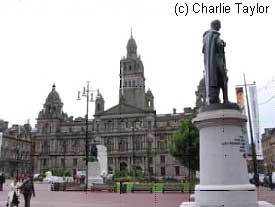 City of Culture in 1990: virtual tour of his surviving works. Glasgow is a fabulous place for retail therapy and has the glitziest and most stylish of shops, all contained within the city centre.
Glasgow International Airport is on the city doorstep – literally 10 minutes away from the centre, Glasgow West End, centred around Byres Road, is the place to be for small cafes, bars, delicatessens and interesting restaurants. This is where the celebs live! http://www.cnag.org.uk/ggc.htm
The home of Billy Connolly, Glaswegians have a style of humour all their own. It is born out of their tough, industrial history but lives on in what has become a sophisticated, vibrant city one bedroom apartment in the city centre available for short breaks He is also part of Highland Country Weddings Ltd, a Scotland based weddings agency. For free discussion about your own wedding plans and free, no obligation quote, go to http://www. highlandcountryweddings.co.uk/