Category Archives: enewsletter

Beetle Diary: leaving London

After four years back in London, the Beetle is scuttling to pastures new. She will continue to be involved with the Globetrotter e-newsletter, so please keep your stories, anecdotes and comments coming!

“Why, Sir, you find no man, at all intellectual, who is willing to leave London. No, Sir, when a man is tired of London, he is tired of life; for there is in London all that life can afford.” – Samuel Johnson

I've lived longer in London than any other place. I love London; if based in the UK, it's the only place I'd chose to live, but…you knew there was a 'but' coming…..like any large city, it has its downsides. On the plus side, I like London for its cosmopolitan mix of people and all that they bring with them. So, for example, one of my favourite restaurants is the Ethiopian restaurant, Merkato on Cally Rd.

I like London's tolerance for dress and eccentricity – if you want to have a pink Mohican, well fine, no-one is going to stop and stare, if you want to have 1000 piercings or walk down the road holding hands with the same sex – nobody minds, or is it more a question that nobody cares? One day whilst walking in the City, I almost bumped into a very tall man with 3 day stubble, blue eye shadow, pink lipstick, wearing a Laura Ashley print dress and Doc Martin boots, and he had amazingly hairy legs! I like the tolerance of however you want to present yourself goes, it's not frowned up to stand out. I like it that we have a live and let live attitude, so no matter what your personal, sexual or religious preferences are, that's fine in London.

I guess I like the diversity of people and backgrounds London offers and all the activities available. If you want to learn tango, go to origami classes, learn car maintenance or Japanese or dress making, there's always a class for you. The night life is good too, ranging from the sort of full on clubs you'd see in any big city to individual hang outs, great wine bars, coffee shops – there's something for everyone – at a price.

Most British people take our heritage completely for granted. I have to confess, I lived 3 minutes walk from St Paul's cathedral, but I've never been in it – I objected to the outrageous entry fee. I could have attended a service, but I didn't. I went to the Tower of London as a child, but not since. One job I had involved working in a John Nash designed building and walking past the Royal National Opera House and St Martins in the Fields on my way to work. I admit, I used to look up and think how lucky I was, but I have only been to the opera twice, though I use the café in the crypt at St Martins in the Field on the odd occasion, but both are very expensive. I like the theatre very much, and there are ways of obtaining reasonably priced tickets, but if you want to go and see a movie in the West End, it'll set you back around £10. The cinemas at the Barbican are my favourite, because you can choose where to sit, it's not quite so expensive and people are generally better behaved – and this is the key to my leaving London.

In London, there is a two tier system of activities and places to go. There are the places that tourists go, like Oxford St, Covent Garden and all of the shops, bars and restaurants around there that no self-respecting Londoner would admit to going to. They are usually too expensive, too loud, too busy and of embarrassing quality; you really have to know where to go, and if you are new to London, this takes time to build up. For me, and I am not a native Londoner, part of the fun in London is discovering new haunts and hang outs. Building this knowledge can be frustrating too. It took me years to find a decent plumber, electrician and painter, and still not found a good builder.

I find London expensive, and I live here, so I imagine that visitors must feel the same. I also think it often offers very poor value for money, ranging from the tourist trap restaurants to historic site entrance fees. Having lived and worked in the US, Germany, Switzerland, Cayman to name but a few places, I don't think we have a very good service culture here in the UK, in shops restaurants and other services. The costs of renting, and even buying a place in Central London are often prohibitive. Bus fares are outrageous – £1.20 a journey and usually take twice the time of a crowded tube in London's traffic. A tube journey costs a minimum now of £2.20 – just avoid rush hour if you can, tube travel is becoming unbearable. Weekly passes are better value, but still expensive. Londoners regularly complain about London transport, but I think we are lucky in having a good network of buses, tubes and trains, even if they are often unpleasantly crowded, smelly, dirty, expensive, slow and late – you try using public transport outside London, in rural areas in the UK, it is almost non existent. Mind you, when I compare the attitude of New York City subway kiosk attendants to the London Underground counter attendants, London wins, hands down for not being as rude and as unhelpful as their NYC counterparts. I won't even bother to discuss driving in London, with congestion zone charges, cameras, lack pf parking, astronomical parking charges and over zealous ticket toting traffic wardens.

Whilst I like the live and let live attitude in London about people's dress and preferences, there are chinks in this when it comes to public behaviour. In the past month, I have witnessed three incidents of bus rage – seriously! The first was a man who was too late to get on a bus on Upper St in Islington. The bus driver refused to let him on the bus as he'd pulled away from the bus stop, so the man walked in front of the bus, arms stretched out wide and refused to let the bus move on. After 10 minutes of this and a torrent of the foulest abuse imaginable, and the bus driver calmly radio-ing “we have a problem”, the man decided to try and punch in the driver's window, repeatedly spat at it and then tried to kick in the bus' folding doors. The passengers and I was one, sat frozen and mute in horror. Another bus incident involved a woman who was either mad or badly in need of help and announced that she was going to kill the vandals responsible for chopping down some tress near where she lived. She took to accusing the entire downstairs of the crowded bus and in particular a gaggle of chip eating school girls at the back of the bus who refused to open the window to let in some fresh air to dilute the stink of chips they were eating. The mad woman and the girls then proceeded to engage in a battle of the foulest language and threats until the mad woman got off. The third incident just makes for more depressing retelling. And yet, I have seen Asian youths give up their seat for older people, but no-one offer their seat on a sweltering and crowded tube for a very pregnant woman. I offered, she refused, like she expected this kind of behaviour. But there are good Samaritans: a couple of months back, I saw a lady trip on the bottom stair of a moving escalator at Euston and a huge number of people stopped to help pick her up, dust her down and collect her bags for her. We are not entirely a capital of monsters, but I do wonder sometimes. When I recounted these tales to my friends, they shrug and say, well, this is London.

I could be boring and go on about the weather, the politics, the dumbing down of our tv, (ironically, the only tv programmes I watch are from the US – CSI, Law & Order, Futurama and the odd film), the British press – we have some of the most obnoxious and intrusive tabloids in the world. We've just had a general election, though you wouldn't know it. Our political apathy is maybe based on the pathetic characters available for election. What's that Dr Johnson said?
Nepal Now by Sue Baker

I was planning to join my daughter in Nepal at Easter, and go trekking in the Annapurna region. Diana Penny at Bufo Ventures was going to book a guide and a porter for us. I booked my own flight to Kathmandu in mid January, then a couple of days later the King took over Nepal and cut off all communications. Cancelling my ticket would have cost a lot, so if Nepal turned out to be a completely no-go area, the contingency plan was to meet in Delhi instead, and go to Rajasthan. But I've wanted to go to the Himalayas for half a century – so we decided to wait and see. The FCO were, and still are, advising extreme caution and their reports makes quite alarming reading.

It took some weeks to get first-hand information from Highland Sherpa, the trekking agency Diana's husband runs. By early March, Kathmandu was quiet, but strictly under the control of the King and the military police. In the west of the country the Maoists were causing some problems and there was some localised fighting in the Pokhara region. For tourists, the only inconvenience was some random roadblocks and demands for money.

We were advised to switch our plans from Annapurna to Everest, and that's what we did. Luckily we were able to book flights to Lukla – everyone else had the same idea, so flights were scarce. There are no Maoists in that area and the Nepalese are very anxious to keep their trekking and tourism expanding as everybody relies on it for an income.

So for eight glorious days we trekked up towards Everest, getting as high as Dingboche before descending by a different route. The local people were charming and hospitable and most of the time you are never far from food, drink and shelter. We met people who had been to Annapurna and had been accosted by Maoists and parted with their 1000 rupees on demand – and even had their photos taken with them! You get a receipt for your 'payment', so if you are held up by another gang, you can show your receipt and will usually be let off. It amounts to less than £10, but you wouldn't want to do it every day or you would have to double your budget! (On our first night, our bill for a double room, plus lunch, evening meal and breakfast for two came to 1300 rupees – a little over £10). One solo trekker we met said she had spent £57 on her nine-day trek, but she admitted she didn't have many showers, as they cost over £1!

The only other restriction in places where there is a military presence is a curfew at sundown. Above Lukla, we only saw a few soldiers – near the ticket office for the Sagarmatha National Park on the outskirts of Namche Bazaar. Their camp is just above the village and it has a very interesting visitor centre you can go into – that's in addition to Sherpa Museum and the History Museum of the Himalayas, under reconstruction in Namche, both close by the camp. In Lukla itself I was challenged politely by a soldier as I returned to my lodge near the airport after watching the sunset at a neighbouring Lodge. In Kathmandu there are still shops and restaurants open in the tourist Thamel district long after dark, so your walk back to outlying hotels may be in darkened streets, but represents no problem.

There are also well-advertised strikes throughout the country from time to time, so if you are relying on public transport these might delay you. Trekkers were flying back to Kathmandu from Lukla, rather than risk the 5-day walk to Jiri only to find the bus back to town (an 11-hour) journey, wasn't running!

So if you have the time to walk the extra miles, or can afford the air fare to Lukla, don't miss out on seeing Everest. The main trails are easy to follow, though not often signposted. There are plenty of lodges and teashops to stop at. On the longer ascents you are usually warned that you are passing 'the last stopping place'. Stopping is essential, as gaining height slowly is the best way to ward off altitude sickness. So you stop to admire the magnificent views, rather than keep looking around and stumbling. You stop to let yaks pass you, standing safely against the mountain, not the outer edge of the path! You stop to let porters carrying enormous loads overtake you. You stop to chat to fellow trekkers – its amazing how often you meet up with the same people. It's a fantastic trip, so DON'T LET THE PRESS PUT YOU OFF. The monsoon season starts at the end of May – so hurry!


Most and Least Liveable Countries

The Human Development Index (HDI), published annually by the UN, ranks nations according to their citizens' quality of life rather than strictly by a nation's traditional economic figures. The criteria for calculating rankings include life expectancy, educational attainment, and adjusted real income.

“Most Liveable” Countries, 2004

“Least Liveable” Countries, 2004

1.

Norway

1.

Sierra Leone

2.

Sweden

2.

Niger

3.

Australia

3.

Burkina Faso

4.

Canada

4.

Mali

5.

Netherlands

5.

Burundi

6.

Belgium

6.

Guinea-Bissau

7.

Iceland

7.

Mozambique

8.

United States

8.

Ethiopia

9.

Japan

9.

Central African Republic

10.

Ireland

10.

Congo, Dem. Rep. of the

Source: www.infoplease.com


Disney Parks

Disney's theme parks were launched 50 years ago this year. It is believed that 4% of all amateur photographs in the US are taken in a Disney park. Walt Disney was not impressed by American amusement parks, finding them “awful, smelly, dirty, and not particularly safe” so he decided to open his own. The Disneyworld resort in Florida opened in 1971, five years after Walt Disney died. The first Japanese park opened in 1983 and Hong Kong's park opens in September 205 and there are rumours, though denied by the company, that India could be next.


The Byzantine Cisterns in Istanbul

After Rome was destroyed by the Visigoths in 410, Emperor Constantine the Great chose a small fishing village on the Bosphorus to become the new imperial capital. This small fishing village was inaugurated as Constantinople, what we now know as Istanbul. The Roman empire based in Constantinople is usually referred to as the Byzantine Empire.

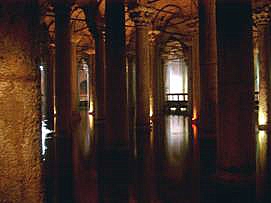
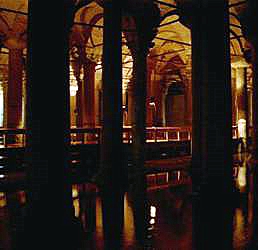
There are many artefacts relating to the Byzantine Empire in Istanbul, but the Beetle's favourite is the Byzantine cisterns. If you've seen the James Bond movie, From Russia with Love, maybe you remember the scene where the redoubtable Mr Bond is rowing in a small boat through a forest of marble columns – this was filmed in Yerebatan Saray Sarniçi.

This cistern is thought to have been built in 532 AD, using marble columns recycled from Greek ruins in and around the Bosphorus. The water was routed from reservoirs around the Black Sea and transported via the Aqueduct of Valens. It was used as a backup for periods of drought or siege for the Great Palace. Historians believe that the cisterns were left largely untouched by the Ottomans, who preferred running, not stagnant, water, and the stored water ended up being used to water the Topkapi Gardens. The cistern was later left to collect silt and mud until it was cleaned by the Istanbul Municipality and opened to the public in 1987.

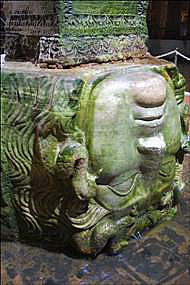
It is just one of many cisterns underneath modern day Istanbul, and the largest at 70 x 140 metres, (or 2.4 acres), and can hold 80,000 cubic metres – over 21 million US gallons). It is very grand and there are twelve rows of 28 columns each making an impressive total of 336 marble columns and you walk between the columns on a large boardwalk. At the far end of the walkway are two large Medusa heads in the north-western corner, one inverted and the other on its side; according to mythology, placing her this way caused her to turn herself into stone. Another theory is that turning her upside down neutralises her powers. There are some huge fish too in the water whose function is to aerate the water (and feed on tourists' handouts). There are signs giving details of classical concerts that take place in the cisterns. The Basilica Cistern was restored in 1980 for visitors.

There's also a café with wobbly metal tables and chairs and orange lighting adding to the subterranean feeling.

Yerebatan is in Sultanahmet Square, at the north-eastern end of the Hippodrome, just off Divan Yolu, and across the street from Ayasofya (Hagia Sophia). Opening hours: Daily 0900-1700. Admission: $3.50.


On Teaching English in Portugal by Sally Pethybridge

Sally, from Malmsbury, Wiltshire in the UK packed her bags a few years ago to make a new home for herself in a small village near Estoril, Lisbon in Portugal. She works as an English as a Foreign Language teacher and here are some of her latest exploits. If you have ever thought or dreamt about becoming a TEFL teacher, then this may provide some inspiration.

I had an interesting job just after Christmas. I was asked to go to Lisbon to assess the level of English of six candidates for a job with a large insurance company. As it was 9.00 in the morning I decided to take the train. So I got up early, got the bus and then the train into Lisbon. It brought back vivid memories of all those months I commuted from Chippenham to Richmond just outside London, except that stood on a chilly platform at Estoril gazing at a blue sea certainly beat standing on a freezing platform at Chippenham and gazing at a car park with bored seagulls. The crowds negotiating train to metro were just like dear old Paddington but hey, trains coincide with the metro and I was at my appointment at 8.50 – not bad eh?

I really enjoyed the interviewing. They all sat round the table and I kicked off a conversation asking them what they all did – some were very good and articulate but there was the usual “I am better than all the rest” one who got on peoples' nerves. I then asked them to write a letter of application in English applying for the job and giving reasons why they thought they were suitable. This narrowed the field tremendously as although they could speak English well, their written work let them down. I managed to shortlist three with one clear contender and then was very pleased when the HR lady told me I had picked the three she had thought were right for the second stage. Result!

Teaching is still fun – I now have an Argentinean plastic surgeon who wants to move to England and has limited English. Joaquim is 33 and has been in Portugal for three years. His brother is a GP in Patagonia. He wants to have his own clinic eventually back in Argentina but the timing is not right at the moment. He is very keen for people to visit the country as the currency exchange is in our favour and not theirs at the moment. I took him on a practical lesson the other Saturday – a tour of Jumbo supermarket and Cascais fruit and vegetable market – he really enjoyed it.

I have also got a new class at a huge toy store. They are a hoot. They are all in the office and I do two hours with them usually on a Tuesday night. It's nice when you work on site as you get to see them in situ. They are very friendly with a wicked sense of humour and don't want books, just conversation and how to deal with English phone calls. One of my students has a great catchphrase when she doesn't understand – “whattee”. They are very interesting and ask intelligent questions regarding translations of phrases or as last week, the headings on a financial spreadsheet. When the Head of HR is not in the lesson, the questions tend to get more relaxed as in “Miss Sally, tell us some swear words in English”! Body parts are also of great amusement.

Jeronimos Monastery, Lisbon, photo by the Beetle

Jorge, my Siemens student, is constantly keeping me amused – if it's not the latest scandal in football, it's the problems at work and the entertaining saga of getting building permits and planning permission for his new house. He is a real pleasure to teach because he is such fun. In fact the whole office makes me very welcome and they all come over and chat and tell me whether they think he is improving or not. He went to Dresden two weeks ago that meant a couple of German/Portuguese/English lessons – I seem to be learning bits of German as well as Spanish these days.

Last week I gave him a crash course in football reporting – three English articles on Jose Mourinho and Chelsea – very amusing and of great interest to the other guys in the office that wanted to know what he was reading. I was very pleased when he told me that he had tried to read English articles on the plane to Dresden.

Tatiana, my tourism student, is having problems working on essays so we have been trying to break her block. We did a short one last week that was basically a précis of a Portuguese legend from Nazare. I'm hoping that the work we did will give her the confidence she needs. We started meeting in the coffee bar at Jumbo supermarket but the smoke was a pain on days when we couldn't sit outside, so then we moved to Cascais Library, where they have tables and chairs (and resident cat) outside but that got too cold. We then found a very nice pastelaria (Lua da Mel or Honeymoon) but recently she has had problems with babysitters, so we have the class in her flat with her baby daughter, Ayeesha who is very sweet and loves unloading my bag and pinching pencils.


NZ Guides

South Island Guides, www.southislandguides.com is a collective of professionally trained NZ guides, specializing in creating exceptional guided experiences. Based in Queenstown New Zealand, our guides have extensive experience and qualifications in all areas of the hospitality and adventure tourism industries. All our activities are tried and true, ensuring a high level of professionalism and client satisfaction. A unique and safe adventure is assured for you, your partner, friends and family.

If you would like more information on our 2005 winter products/services or our summer products/services 2005/06 please get in contact with us at info@southislandguides.com


Smallest Countries

As a result of last month's feature on the world's smallest countries, David wrote in to say:

Ahh, but what about the Sovereign Military Hospitable Order of St. John of Jerusalem, Rhodes, and Malta, which has diplomatic ties with 87 countries, its own license plates, postage stamps passports, and currency, and runs dozens of hospitals and clinics worldwide. Its sovereign territory is a second floor office suite in the Palazzo Malta at 68 via de Candiotti in Rome, and an applicant for UN membership.

Slightly larger, but not as big as Vatican City, we of course have Sealand, which you probably know–six miles off the English coast, a WWII antiaircraft tower “liberated” in 1967 by Major and Mrs. Roy Bates.

What do you think? Let the Beetle know!


Outdoor Enthusiasts Urged To Protect Against TBE

Outdoor enthusiasts and holidaymakers planning trips to central and eastern Europe this year are being warned about a potentially life-threatening disease.

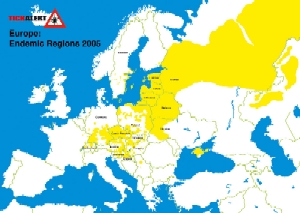
tick ditribution map

The 'Tick Alert' awareness campaign urges travellers to 16 named European countries, including many of the new popular destinations for outdoor tourism such as Croatia, Slovenia and Slovakia, to protect themselves against Tick Borne Encephalitis (TBE).

Increased tourism to rural and woodland areas of endemic countries in Europe is increasing the risk to visiting UK outdoor enthusiasts, the majority of whom remain unaware of the disease, how it is contracted or that they are members of a high-risk travel group.

TBE is a potentially life-threatening viral disease that can lead to meningitis and in serious cases can result in paralysis and death. It is transmitted via the bite of an infected tick, found typically in rural and forest areas up to a height of 3,000ft and occurs mainly during the late spring and summer months. The disease can also be transmitted by the ingestion of unpasteurised milk.

There has been a dramatic rise in the incidence of tick-borne diseases in central and eastern Europe over the last 10 years. TBE is now endemic in countries spreading from Sweden, across the Baltics and down to Croatia.

The fact that a number of endemic countries conduct intensive inoculation programmes for their resident populations should be heeded by all UK visitors.

“There is a low awareness of TBE, even among people experienced in outdoor activities abroad,” said Tick Alert's Lynda Bramham. “The aim of this campaign is to encourage anyone travelling to TBE endemic regions, and at risk of the disease through their outdoor leisure activity, to take effective precautions.”

Official figures show the number of UK tourists to the former Yugoslavia rose by 40 per cent last summer to 114,000 compared with the previous 12 months. Similarly, visitors to central and eastern Europe reached 558,000, an increase of 38 per cent.

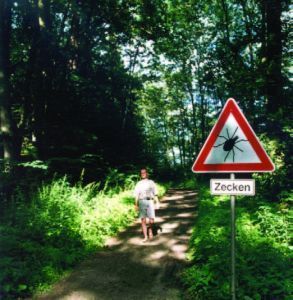
Warning Sign In Woods Adventure travel, hiking and mountain biking in Europe are all increasing in popularity as people discover these new destinations.

A 2004 report by Mintel highlighted the growth of agritourism and countryside holidays in places such as Croatia and Estonia, and the Association of British Travel Agents (ABTA) lists Slovenia and Bulgaria among its hot tips for holidays in 2005.

Professor Sarah Randolph, head of the Oxford Tick Research Group at the University of Oxford said: “In some countries of mainland Europe the most serious vector-borne disease is caused by a virus transmitted by ticks, tick-borne encephalitis (TBE), which may kill one in every hundred people infected.”

There are a number of bite prevention measures that can be taken to reduce the risk of infection: these include using an insect repellent, wearing protective clothing to cover all areas of exposed skin, regularly inspecting your body for tick bites and carefully removing any that are found. However, the Foreign Office advises that travellers to TBE endemic regions seek inoculation advice form their local surgery of clinic – well before travelling.

tick alertImmunisation against TBE is available as a paid-for travel vaccine from specialist travel health clinics operated by MASTA, the UK's leading provider, and at GP surgeries and healthcare centres. For further information and advice for travellers visit www.masta.org/tickalert